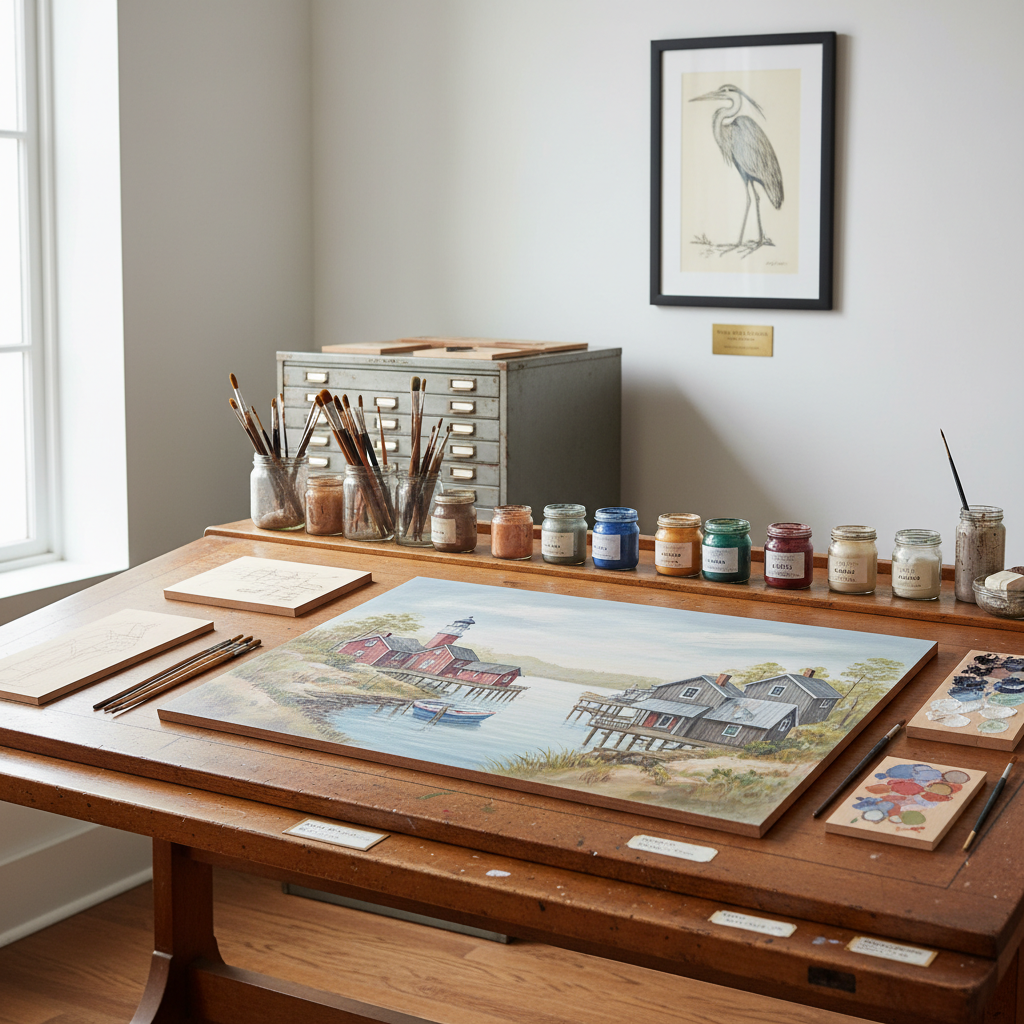
A refined studio workspace for a folk artist, featuring a wide, antique drafting table scattered with neatly organized brushes, pigment jars, and small wood panels in progress. On the table, a detailed, hand-painted scene of a North Carolina coastal village emerges in carefully layered blues, grays, and muted reds. Behind, tall flat files labeled for museum archives and a clean white wall displaying a single framed piece with a discrete institutional label. Soft north-facing window light washes the room, creating gentle shadows and emphasizing textures of paper, wood, and paint. Photographic realism, captured from a three-quarter angle with shallow depth of field that keeps the main panel in crisp focus, conveying disciplined craftsmanship and professional seriousness.

Studio Journal

Notes on new paintings, folk traditions, and the journey from Rockingham to national collections.

Stories

Newsletter

Get new works and events first.

About

Featured Stories from the Studio

Explore in-depth looks at Lula Smith’s paintings, photo essays from her Rockingham studio, and interviews that trace her North Carolina folk art roots to national collections at the Smithsonian, the White House, hospitals, and libraries.
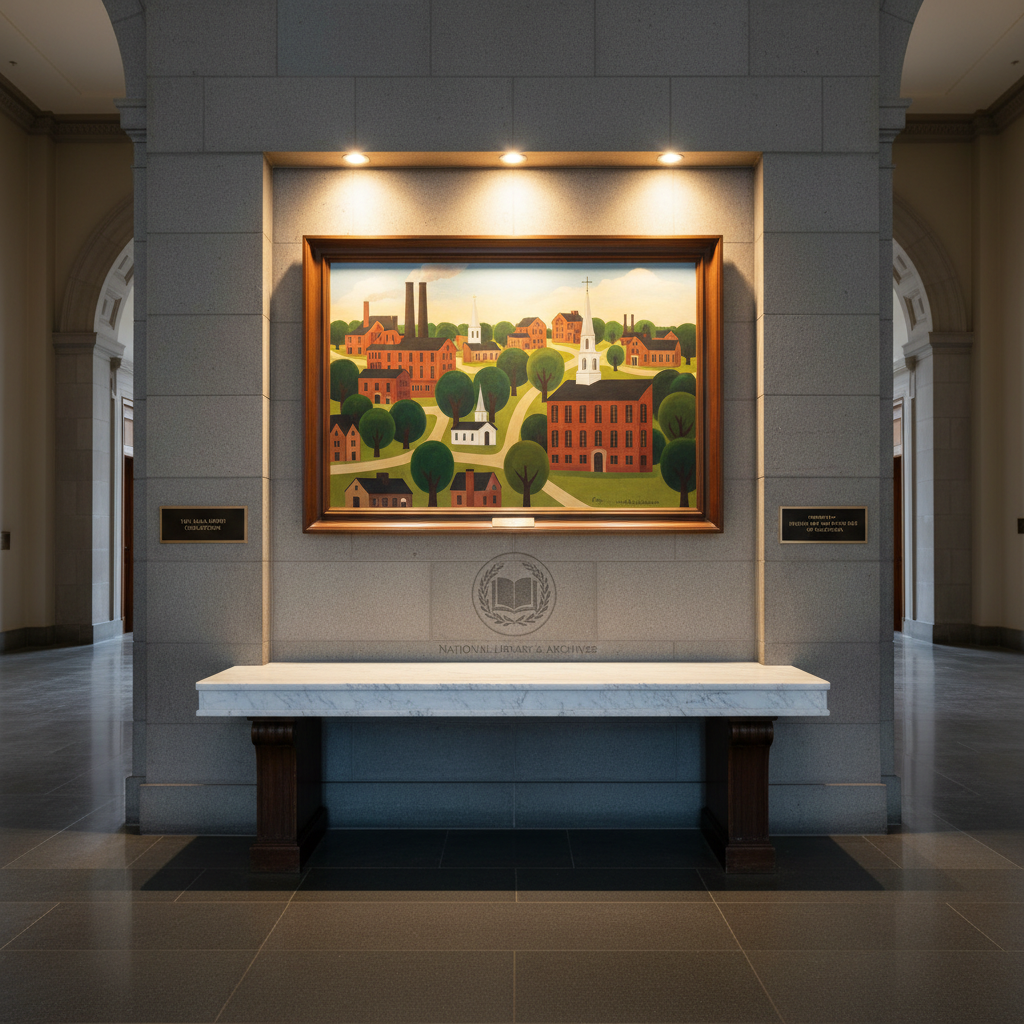
A dignified, formal reception area of a major public institution, with a broad, marble-topped console against a stone wall. Above the console, a luminous Lula Smith folk art painting of a stylized North Carolina Piedmont town—brick mills, church steeples, and tree-lined streets in elegantly simplified shapes—hangs in a dark, museum-quality frame. Discreet plaques and a subtle engraved emblem on the wall suggest placement in a national library or government building. Soft, warm architectural lighting from concealed fixtures above bathes the painting, creating a quiet halo and soft reflections on the marble. Photographic realism, straight-on composition with symmetrical balance, conveys prestige, permanence, and institutional trust in the art’s cultural value.